Subscribe

RSS Feed (xml)

Powered By

Skin Design:
Free Blogger Skins

Powered by Blogger

Showing posts with label book review. Show all posts

Monday, August 31, 2009

The Invisible Man (review)


The Invisible Man by H. G. Wells
Reason for Reading: In the tbr stack
Rating: 2.5/5

Summarize the plot: A mysterious stranger appears in the town of Iping. He never uncovers his face, his temper is ferocious, and it seems he is experimenting with some kinds of chemicals. What could be his secret?

One sentence review: Excessively moralizing plot makes what could have been a fascinating read a bit dry

What I liked: Since, like it or not, the Invisible Man has entered the pantheon of cultural icons, appearing in all sorts of movies, comics, books, and the concept having reappeared in all sorts of other places, it was interesting to see where it all started. The simple countryfolk that the Invisible Man takes advantage of are meant to provide comic relief, and I did find myself smiling at their innocent theories about what the strange man's secret was.

What I didn't like: I just could not understand how someone who was smart enough to figure out how to turn themselves invisible couldn't figure out how to walk quietly enough that he wasn't always being caught by everyone. People, even the simple folk of Iping, kept hearing mysterious sneezes and footsteps, and eventually connect the dots. Likewise, I think I would have found him a little more sinister if he was actually could at manipulating people or actually terrorizing them. Even at his best, he's not very good at scaring anyone. He seems to incite anger, rather than cowering. And once he finds a homeless tramp that he wants to turn into his lab assistance, his only method of control is to say "I'll kill you?" Meh. As soon as his "assistant" gets away, he's shouting for the police. The Invisible Man is clearly shown by the end to be insane, but I think the book might have been more interesting if it was more of a horror read or if the Invisible Man had succeeded at more than just turning himself invisible.

Should I read it? There are 1. better classics to spend your time on and 2. better H. G. Wells books to read.

Wednesday, August 12, 2009

Storm Front (review)

Storm Front by Jim Butcher
Reason for Reading: Sounded interested
Rating: 3/5

Summarize the plot: Harry Dresden is a wizard. He also solves crimes.

One sentence review: For some mindless escapism, this book didn't annoy me, but it didn't really make me keep reading the series either.

What I liked: Harry Dresden is an interesting character, and I liked the fantasy element in an otherwise pretty typical police procedural.

What I didn't like: I didn't hate the book. I didn't even dislike it. But it was such complete fluff that I can barely remember the plotline now that it has been a few weeks since I read it. I don't really like police procedurals very much, and despite the inclusion of fantasy, there isn't too much originality in this book. Yes, it's entertaining. My husband read this one after me, and in the past month has read like six more of them. But I just wasn't that into it.

Should I read it? Plenty of other people have really enjoyed this book. If the combination of fantasy and crime novel sound like your thing, you'll probably enjoy it more than me.

Other opinions:
1330V, stephanie's confessions of a bookoholic, Rhinoa

Wednesday, August 5, 2009

Bluebeard (review)

Bluebeard by Kurt Vonnegut

Reason for reading: Literary crush on Kurt Vonnegut

Rating: 4.5/5

Summarize the plot: Rabo Karabekian is a retired painter, and he's been bullied into writing his memoirs by the incomparable Circe Berman. Like the Bluebeard of old tales, he keeps a secret locked in his barn.

One sentence review: Vonnegut's wizardry with words makes this character-heavy, plot-light novel completely and utterly readable.

Longer review: I completely gushed over my first Vonnegut read, Slaughterhouse Five, so I figured I would probably enjoy this book as well. I LOVED Bluebeard. Ordinarily, I would not get so excited about a book that jumps all over the place, and barely has a plot, but Vonnegut sucks the reader in with his uniquely enjoyable writing. He has a literary style, but somehow he manages to be so much more accessible than your typical literary novel. Okay, here's the opening lines. I mean, who wouldn't want to keep reading after this opening?
Having written "The End" to this story of my life, I find it prudent to scamper back here to before the beginning, to my front door, so to speak, and to make an apology to arriving guests: "I promised you an autobiography, but something went wrong in the kitchen. It turns out to be a diary of this past troubled summer, too! We can always send out for pizzas if necessary. Come in, come in!"
Rabo Karabekian is a fictional painter who came of age during the American Abstract Expressionist era. His great works of art were created with Sateen DuraLuxe, a paint so toxic and short-lived, his paints have crumbled to dust and no hazardous waste facility wants them. His wife and children are no longer part of his life, and he lives alone in an old mansion.

What I liked: I liked the format of this book. It is split into short sections, and Rabo skips between the past and present, completely nonlinearly, but somehow you never feel lost. I think it helps that he hones down on a few of the themes of his life that are the most important to him, and goes back and forth between how it was in the past and what actually happened.

Rabo's character hooked me in. All of the main characters in his life were vividly written. Although some were outlandish, they never felt unreal. Especially the violent relationship Rabo describes between his painting master and his lover, Marilee, who Rabo secretly loves too. The woman he can't have, the one who gets away. The majority of the novel is focused sharply on her.

What I didn't like: Duh, it wasn't long enough! No, I mean, it was the right length, but when I got to the end, I felt like I didn't really know much more about some of the other people who were important in Rabo's life, like his family or his best friend, a painter who shot himself in the head. By sheer amount of words dedicated to her, it appears that the only important person in his life was Marilee, which I suppose was the point.

Should I read it? In a word, yes.

Saturday, August 1, 2009

A Beautiful Child (review)

A Beautiful Child by Matt Birkbeck
Reason for reading: Recommendation from my sister
Rating: 4.5/5

Summarize the plot: A Beautiful Child is the true life story of a girl named Sharon. In high school, she was at the top of her class, she worked as a Lt. Colonel in the ROTC, won a scholarship to Georgia Tech, and seemed to have everything going for her. But behind the facade, she was forced to hide a terrible secret about the man she called her father, a secret she kept so well even those who knew her best never guessed the truth.

1-Sentence Review: A tightly written book that examines a tragic young life, the man who took it from her, and the search to find out her true identity.

Longer review: A Beautiful Child was an interesting choice to read around the same time as another book I reviewed earlier this week, The Lucifer Effect. The latter is a lengthy academic contemplation on the nature of evil, and the potential for evil within everyone. A Beautiful Child, on the other hand, is a short, true-crime, journalistic look at a person who can only be described as pure evil.

Without giving away too much from the novel, Shannon Marshall, likely kidnapped as a child, was forced by a man named Franklin Floyd to live out a life with him that became ever more horrifying as his grip over her intensified. It is a tragic story, through and through, and yet because Birkbeck writes with a terse, journalistic style, I felt like I could handle reading it. I felt an emotional connection to the story, but I never felt that the book was emotionally exploitive, shoving my nose into a situation that is already horrible enough.

Shannon Marshall's life defies understanding. As Birkbeck unraveled the layers to her life, the lies she was forced to enact, and the sheer number of people who sensed something was wrong but didn't intervene in time, a huge question emerges that Birkbeck only briefly addresses. How could something like this happen? While giving a serious answer to a complicated question like that is outside the scope of this book, I think most readers will walk away from the book at the very least, contemplating that question. Hopefully it will be a wake-up call for anyone who encounters an exploited child to take signs of abuse seriously.

Should I read it? It is a quick, thought-provoking read, but be forwarned that the details are shocking and some may find them disturbing.

Visit MattBirkbeck.com

Wednesday, July 22, 2009

The Ghost Brigades

The Ghost Brigades by John Scalzi
Reason for Reading: For Fun (Imagine That)
Rating: 4/5

Summarize the plot: Charles Boutin is a traitor to the human race and thanks to him humanity is on the verge of invasion by a powerful coalition of alien races. But the Special Forces have one way to try and find him. Boutin found a way to create a back up of his consciousness, and in his haste, he left it behind. Drop the consciousness into one of the Ghost Brigade bodies, and there's a chance of discovering why he did what he did. Except when Jared Dirac wakes up with Boutin's consciousness, he doesn't remember anything at first. But when the memories start coming, can he figure everything out in time?

1-sentence review: Another great entry into the Old Man's War universe.

Longer review: A mix of Scalzi's usual kick-ass adventure and thought-provoking science fiction. Although Scalzi's strength is usually not charactization, I really, really liked Jared Dirac. Like he might be my new favorite character from the series. We were introduced to the Special Forces, AKA, Ghost Brigades in Old Man's War, but in this book we get to be totally immersed in their world. Jared is not only a special breed because he is part of the Special Forces, but he has to deal with the confusion of having someone else's consciousness implanted into him. He was created with the purpose of finding Charles Boutin, and everyone hovers over him, unsure whether he's going to snap someday. And despite all of that, Jared evolves into his own person, sometimes incredibly naive, but always trying to do the best thing. He's very different from the older, wiser, and wise-cracking John Perry of the first novel. I think a highlight of the novel is the way Jared moves from being a confused newborn to an experienced soldier willing to sacrifice to save his friends.

Another thing I really enjoyed about this novel is that Charles Boutin's motives for what he did are kept very secret until the end, and even then, he isn't painted as a complete villain. Scalzi allows for some gray areas, which I already know (since I read these books out of order) will be even more fully developed in The Last Colony. The Colonial Defense Forces keep the human colonies alive, but we begin to question their methods.

Reading this book illuminated a few final details that didn't quite fit when I skipped from book one to three, and I think I might like it even more than The Last Colony. The character of Jared Dirac goes a long way towards making it a favorite.

Should I read it? If you liked Old Man's War, don't skip over this one. It's worth your time.

Other opinions:
Becky, Medieval Bookworm, True Science Fiction

Monday, July 13, 2009

Peace Like a River


Peace Like a River by Leif Enger
Reason for Reading: In my tbr pile
Rating: 4.5/5

Summarize the plot: Peace Like a River is about the Land family. The father, Jeremiah, is a man of faith working as a janitor at the local high school, raising his three children alone. Their lives are turned upside down when two neighborhood boys start a feud with the Lands. Davy, impatient for justice, shoots the two teenagers dead and winds up in jail. But when he escapes from jail and strikes out on his own, Jeremiah and the other two decide to try and find Davy.

1 sentence review: This quiet, atmospheric story about an unusual family in an extreme situation is absolutely worth the read.

Longer review: The best reason to read this book is for the richly developed characters. Reuben, the younger son, is the perfect narrator for the novel. He admires his older brother, even when his brother carries out a rash act that leaves two people dead, and he's determined to try and find his brother. Even when he isn't quite sure what the right thing to do is, he always tries to stay loyal to his family. And I loved his relationship with his sister and best friend, Swede, who has a knack for writing poetry. Except starting with when Davy is arrested, Swede starts having a hard time ending her poems. She likes writing westerns, with justice at the end, but when life seems uncertain, so are her poems.

One thing I also really liked about this book was the way it portrayed Jeremiah Land. He is described as a man of faith, and one of the first things Reuben tells us about his father is that he works miracles, the first miracle being bringing Reuben back to life after he was born not breathing. Jeremiah, however, is never presented as one-dimensional. While he is deeply religious, he is torn about what to do about Davy. If he manages to find Davy, should he help him continue to live on the run, or turn him into the police? He faces that dilemma first with one resolute decision, but over the course of the novel, he starts to change his mind.

The final thing I'm going to mention that I really enjoyed about this novel is how it transported me to small town Minnesota 1962. The details to set the historical part are all there, but they aren't overwhelming. The setting came across most strongly in the simple, midwestern way the characters all talked, or in describing the bitterly cold winter. Being that I live in Minnesota, I could totally identify with living through a blizzard or being forced to stay inside for a month because the temperature refuses to get above 0.

And the ending? I was meh about certain parts of it. Everything did get wrapped up, but aspects felt a little unresolved for me. However, I liked everything else well enough that I was willing to forgive that.

Should I read it? Are you in the mood for something to transport you completely? Then yes.

Monday, July 6, 2009

Reviews: On Beauty, Middlesex, The Apprentice's Masterpiece

On Beauty by Zadie Smith
Reason for Reading: Recommendation
Rating: 2/5

1 paragraph plot summary: This book is about the intertwining lives of the Belsey and the Kipps family. Howard Belsey and Monty Kipps, both college professors at opposite ends of the political spectrum, have long been enemies. But things become complicated. Howard's son, Jerome, a newly born-again Christian goes to intern with the Kipps and ends up falling in love with Victoria Kipps. Monty gets a job teaching at the same college as Howard, and their wives become friends. Kiki, Howard's wife, is trying to come to grips with the revelation that Howard cheated on her.

1 paragraph review: with all due respect to all of the awards this book has won, I was pretty much left cold by this book. It is a character study without much plot, and there were isolated passages that I thought showed extreme insight into the characters' lives and motivations, but I couldn't get too interested in any of the characters, and there was no resolution. None. Howard, who was in many respects, the main character, thought way too highly of himself. I liked Kiki, who is probably the most sympathetic character, but even so I was having trouble with the lack of a plot. I think what really brought it home for me was that when I was reading reviews, I kept hearing this book referred to as a comedy. I never really saw it as a funny read, and in fact, it was pretty sad throughout.

Should I read it? Maybe. It might be more to your taste than mine.

Middlesex by Jefferey Eugenides
Rating: 4.5/5
Reason for Reading: Recommendation from Nymeth I believe

1 paragraph plot summary: I'm going to just quote the opening line of the novel to clue you into what it is about: "I was born twice: first, as a baby girl, on a remarkably smogless Detroit day in January of 1960; and then again, as a teenage boy, in an emergency room near Petoskey, Michigan, in August of 1974." This, like On Beauty, is a much-awarded, much-touted literary novel, but I had about the exact opposite reaction to this book. Also a book full of well-developed characters, I couldn't put this book down. Middlesex is undeniably about Cal, the narrator who discovers she is intersexed at the tender age of 14, but it is also about her grandparents, who began life as brother and sister in Greece but had become husband and wife by the time they arrived in America. It's about Cal's parents, Tessa and Milton, who open a chain of Greek-flavored hot-dog stands. It's about Cal's childhood living as a girl, and the events that lead up to her emergency room revelation. It's about the summer Cal fell in love. Middlesex is an engaging read that hooks you and doesn't let you go.

Should I read it? Yes, please do.

The Apprentice's Masterpiece by Melanie Little
Rating: 4/5
Reason for Reading: Interest in books set in Spain

1 paragraph plot summary: Set against the backdrop of fifteenth century Spain, when the Inquisition was just getting into full swing and religious intolerance was reaching new heights is the story of Ramon, who came from a converso, or formerly Jewish family, and Amir, a Muslim who is also forced to give up his faith to blend in with society. A drama about friendship and betrayal while living in turbulent times.

1 paragraph review: I wasn't sure what I was going to think about this YA novel, which was written in poetry form, about life during the Spanish Inquisition. But after a few chapters, I stopped even noticing the fact that the book was split up into verses, I was just drawn into the narrative of two boys who both must deal with prejudice. For anyone who has ever learned about the era of Ferdinand, Isabella, and Columbus with the glossed over idea that the fifteenth century was Spain's glory age, this book shines a light into the dirty underside. The wars that were financed by taking money, property, and land from so-called heretics (mostly Jews or those accused of being Jews for the most tenuous of reason), the devastation of the Muslim culture when the Moors were expelled... I could go on, but then I wouldn't leave anything for you to enjoy when you pick up this delightful little book.

Should I read it? Ignore the fact it's written in verse form. It's a powerful read none-the-less.

Tuesday, April 21, 2009

Heat Lightning

Heat Lightning by John Sandord
Reason for Reading: Friend's recommendation
Rating: 3/5

I figure it's about time to post another review and I feel wholly inadequate to review The Book Thief today, so I'm going to review this book instead. Hailing from the literary genus murderous mysteriosius, it is a quick whodunnit starring John Sandford's Virgil Flowers. A man winds up dead next to a veteran's monument in Stillwater, MN with a lemon in his mouth and Bureau of Criminal Apprehension detective Virgil Flowers is out to find out who's behind it.

I'm not much of a mystery reader, even less so of police procedurals. Wooden characters, overly witty banter and head-scratching twists and turns tend to turn me off. However, I did read through this one rather quickly for two reasons:

1. It was set in Minnesota, my home state. It was fun knowing all of the places discussed in the book.

2. I thought I might have figured out the mystery and I wanted to know if I was right (I was). For some people, it might be annoying to figure out quickly during the book what's going on, but it made me feel smart.

Should I read it? This book wasn't really my thing, but if you are a fan of police procedurals, you will probably enjoy it.

Tuesday, December 30, 2008

The Last Colony

The Last Colony by John Scalzi
Reason for Reading: The Hell of It
Rating: 4.5/5

The Last Colony is another kickass entry into the Old Man's War series. Okay, so there are plotlines that aren't followed up on, and I still felt like I didn't know some of the characters as well as I wanted to. But like Old Man's War, I didn't care. Because, like I said, it kicked ass.

This book follows up on Jane Sagan and John Perry who have managed to survive life in the army and have now retired to life as the administrators of a backwoods colony. They have an adopted stepdaughter, Zoe, who comes along with a pair of hive-mind aliens who consider her to be like a deity.

Life changes, though, when John and Jane are offered the chance to establish a new colony ominously named Roanoke (history must not have been John's strong point or he probably wouldn't have taken the job). Anyhow. They work at establishing the colony, when the pieces start fitting into place... John begins to suspect that they are pawns in an enormous intergalactic war.

The Last Colony moves along at a brisk pace, and I enjoyed the further adventures of John and Jane. Zoe, despite being their daughter, didn't really recieve star billing, but I happen to know that Scalzi wrote a YA novel retelling the events of this story from Zoe's perspective, so I'll be picking that one up eventually.

Recommended (especially for the upcoming scifi experience)

Other Reviews:
Renay

Saturday, December 27, 2008

A Thousand Splendid Suns

A Thousand Splendid Suns by Khaled Hosseini
Reason for Reading: Turkey coma on T-Day
Rating: 4.5/5

I enjoyed Hosseini's previous book, The Kite Runner so much that I was absolutely afraid to read this book for fear my expectations were too high and I would hate it.

As it turned out, my fears were unfounded. This book bears similarities stylistically and thematically to The Kite Runner, but it is just as good, if not better. It follows the very different lives of Mariam and Laila, who through very different life circumstances end up married to Rasheed, a shoemaker. Mariam is the illegitimate daughter of a wealthy businessman in Kabul, and a yearning to be fully accepted by her father leads to a distintigration of the familiar, if poor life she has been living. She winds up being married off to Rasheed, but marriage gives her little happiness. For many years, she endures life, until Laila comes into their household. Rasheed and Mariam have been estranged for many years now, but still Mariam protests the idea of another wife being brought in to the house. But Mariam and Laila strike up an unlikely friendship that will sustain them through some of the darkest hours of life in Afganistan.

Hosseini does an excellent job of writing characters that the reader will identify with and care about. Mariam's life is a very unhappy one, so we really root for her when Laila comes into her life and things begin to look up for her. Rasheed, who abuses both his wives horribly, is a monster, pure and simple, but he isn't a caricature or one-note stereotype. He's charming when he wants to be, his favoritism wavers and his tempers are erratic.

All of this is set across the backdrop of the tumultous real history of Afganistan. As when I read The Kite Runner, I felt as if I understood the history of Afganistan so much better than if I had read an article in Newsweek. By reading about what people went through day in and day out as first one political party took control and then another, I can tell you a lot more about what's going on over there right now.

Each political upheaval had its own horrors, but the description of life under the Taliban was especially hard to read. Women were not allowed to walk the streets without a male escort. Because of the intense poverty, Laila is forced to leave her daughter in an orphanage. She is only allowed to visit on the whim of Rasheed, when he will consent to accompany her. I kept waiting for these women to escape their brutal treatment, but how does a person escape when they can't even cross the street?

Although its been over a month since I actually read this book, it has stuck in my mind. It is quick. Thought-provoking. Well-written. Highly recommended.

Other reviews:
Blue Archipelago, Rhinoa, Dewey, Wendy, Out of the Blue, Maw Books, The Inside Cover, Thoughts of Joy, Florinda (Did I miss you? Let me know!)

Friday, August 29, 2008

Montana 1948


Montana 1948 by Larry Watson
Reason for Reading (listening): Need to entertain myself on commute to work
Rating: 3.5/5

Montana 1948 is a book that I loved. And I hated. It is a coming of age story, told from the perspective of 12-year-old David Hayden. We have both the benefit of David's perspective as both a child and as an old man, as he reflects back and fills in details of the story that he did not completely comprehend as a child.

This book is about the events that happened one summer, to David and his family. Secrets come to the surface that end up permanently altering David's life, and the structure of his family forever.

This book won a number of awards, and deservedly so, for the writing is very descriptive character study. Larry Watson brings to life vivid characters in a relatively short book.

This book had me from the beginning, but as I was listening, as I got towards the last disk, I kept thinking to myself, boy there is a lot to wrap up and not much time left to wrap it up in. How is the writer going to conclude this one?

Well, this gets to the part I didn't like about the book. The ultimate conclusion to the book ticked me off. It felt sloppy. It felt too convenient, and most importantly, it seemed to contradict the wonderful characterizations that had already been established.

Now that is just my take on the ending, and in a google search, none of the other reviewers I saw felt the same way about the ending, so it could just be me. Because this is a great character study, I would still recommend this book. And maybe you'll feel differently about the ending.

Other reviews:
Trish (Hey lady! Whatcha Readin'?)

Saturday, August 16, 2008

Little Altars Everywhere

Little Altars Everywhere by Rebecca Wells
Reason for Reading: Need for something more mindless
Rating: 4.5/5

A companion novel to the better-known book Divine Secrets of The Ya-Ya Sisterhood, this book is best summed up by the old saying: we put the fun in dysfunctional.

Because this book is laugh out loud hilarious. It is also heart-breaking. Not many authors could easily fuse the two emotions so seemlessly.

This book might be easily labeled 'Chick lit', but don't let that throw you off. It is a keen-sighted character study of an entire family. Told in vignettes that alternate narrators, it is the story of the Walker family. It is set mostly as the four Walker children are growing up in the South of the 1960's.

Wells has an impeccable sense of place. The brands, the music, the attitudes of that era... she captures it perfectly. She also knows how to give the reader fascinating characters that won't easily be forgotton. I pretty much gobbled this tasty read in about one sitting. Since it's hard to really explain what this book is about (it's not necesarily about any one particular thing), here are some quotes:

The minute we hit the kitchen door you can hear that dog yipping. You can hear her little toenails tapping against the wood floor while she runs down the hall. Buggy (their grandmother) lets those toenails get so long, it's like Miss Peppy is wearing little poodle high heels.

My Daddy told Buggy once, If you don't trim that dog's toenails, someone is going to report you to the ASPCA.

After that, Buggy keeps that poodle away from my Daddy. She doesn't believe in cutting Miss Peppy's toenails because she says it depresses Miss Peppy. But you better believe she gets scared when my Daddy threatens her with punishment from a big organization. Buggy is terrified of big organizations. She says they're all in cahoots with each other. For instance, she thinks the Communists have infiltrated the NASA space program to ruin the weather so they can destroy the Catholic church.


.....

Before he could marry Mama, they made Daddy sign an official document promising to raise us all in the Catholic faith. He also agreed to go to Catholic Instruction every Thursday night for two whole years. But when push came to shove, Daddy refused to join the Catholic Church. He said, Ya'll are like sheep to the slaughter when it comes to the Penguins (which is what he calls the brides of Christ)....

Now I didn't even know about this before we started at Divine Compassion
(their school), but at school I'm always singled out because I'm the child of a "Mixed Marriage." That means I'm likely to make the Baby Jesus cry a lot more than a kid with two Catholic parents.

I highly recommend this particular book even though my particular review is particularly undescriptive. Because it is particularly good.

Friday, August 8, 2008

Mercy Street

Mercy Street by Mariah Stewart
Reason for Reading: ARC I recieved
Rating: 2.5/5

Describe the plot
Four teenagers enter a park to hang out, two are found shot in the head, two are missing. The two missing teenagers are the main suspects, even though they were all friends.

Through a series of connections, former detective Mallory Russo ends up being hired as a private detective to solve the case. She resigned from the force after rumors floated around and the other officers turned their back on her. Now she's teaming up with the new kid on the block, Detective Charlie Wannamaker to find the real killer.

What did you like?
I started to get into the mystery at the beginning of the book, and I thought Mallory was an interesting character with a good eye for picking up details. There was an especially great scene where she plots out a way to get one of the missing teen's younger sister to talk to her that. I liked her friendship with Charlie.

Having worked with people with disabilities, I was a little leery when an autistic character is introduced. I think the concept was handled pretty well, though, with the symptoms described realistically.

Why did you give the rating you gave?
I've read plenty of positive reviews of this book, so I admit openly that I may not have liked this one as much because cop mysteries aren't my genre. I started out really following along with the twists and turns in the plot until I realized that the story wasn't building towards any more plot twists. Everything was revealed early on except how they were going to bring the criminal in. I was annoyed at the abrupt romantic relationship that developed between two characters without any reason. Most of the characters (aside from Mallory) seemed like props to move along the plot, sort of like in an episode of CSI. In a book, I would expect more development, I guess.

If you enjoy the genre, you may find this book extremely enjoyable. If you've reviewed it, let me know, I'll link you here.

Saturday, August 2, 2008

The Free Lunch

Disclaimer: this is not about a literal free lunch that I'm giving away. Much as I'd love to.

Anyhow.

The Free Lunch, by Spider Robinson
Reason for Reading: Boredom with other books in immediate stack
Rating: 4/5

Imagine a theme park like Disneyworld, but better. It's got rides based on Beatles songs, themed characters from The Princess Bride and Have Spacesuit, Will Travel and better yet, it's literally impossible to have a bad time there. It's called Dreamworld.

If your life was terrible enough, wouldn't you want to move there and never leave? For 12-year-old Mike, it's his entire goal in life. He's tried breaking into Dreamworld three times before, but on the fourth try he meets a remarkable woman named Annie who helps him finally succeed. She's been Underground in Dreamworld for longer than Mike's been alive and with her help, he gets to explore the behind-the-scenes magic of Dreamworld. At first, living underground in Dreamworld is everything he imagines, but when an unknown threat shows up, he and his new friend will be tested to the limit as they do everything in their power to protect the world that they love.

This is a random book I picked up at a recent library sale, so I really had no clue what it was going to be about. The first thing I had to struggle with a bit is getting used to the setting of the book. When I read science fiction, I tend to pick older books which were written before modern computers or the internet. Heinlein, Asimov and all of the other great writers I can't think of right now all imagined similar technologies to what we have, but they used different terms than "internet" "email" and "cell phone". It was different for me to read a more contemporary science fiction novel that actually referred to all of those modern conveniences. Also, when the book opens and we start to learn about Dreamworld, I kept expecting more science fictiony parts to it. For the most part, it's described as a futuristic Disneyworld, and it didn't seem that far removed from the real world.

That's not a criticism, actually. The science fictiony parts came in at a point where you were least expecting it, and going behind the scenes of Dreamworld actually made me wish there was such a place because it just sounds so darn cool. This books shifts into more of an action/adventure novel after Mike and Annie discover something amiss in Dreamland, and the emphasis is less on how cool Dreamworld is (bummer in my opinion) and more on how to save it.

The bad guys are really really bad, and Annie and Mike make an interesting, if somewhat odd pair to face them down. I kept thinking it should bother me that Mike was supposed to be 12 years old but talked and thought like an adult, but somehow, it just didn't. I didn't care. This book was just too much fun. I loved going behind the scenes at Dreamworld with them. I loved the tender relationship that developed when Annie, a cantankerous loner who hasn't been around people in the past thirteen years, impulsively decides to befriend Mike.

This book is written almost at a YA level, but like I said, the baddies are really bad, so this book is not for younger teens. If you like Disneyworld and/or science fiction, this is a combination muy perfecto.

Monday, June 9, 2008

Entombed

Author: Linda Fairstein
Reason for Reading: Bookclub at work
Rating: 2/5

Sometimes when I just want to watch some mindless TV, I enjoy watching one of the many CSI spinoffs. The police characters are generally stereotypes there to move the plot along, and I pay no attention whatsoever to what happens with their personal lives. The suspects and people they interview exist to give us clues to the mystery, and one can predict plot twists by how many more minutes are left in the episode. (Okay they've caught who they think is the killer, but its only 8:40. They've clearly got the wrong guy.)

I don't generally read many mysteries except for the Agatha Christie variety, but somehow I expected more from this book than to be a full-blown CSI episode. I really couldn't tell you a single detail about any of the characters and in fact, as the book progressed, I frequently lost track of who was talking. The clunky style kept me constantly a step behind.

The plot revolves around a skeleton found behind the wall of a college building where Edgar Allen Poe once lived. As it looks like the victim was likely entombed alive, Assistant District Attorney Alexandra Cooper is immediately reminded of Poe's fiction. At the same time, her old nemesis, the Silk Stocking Rapist is back. She's determined to hunt him down this time and make him pay for his crimes.

I diligently read this book for my book club, but if not for the "I have to read it or I can't make it to book club", I would have put this book down about chapter 6 and not picked it up again. Like I mentioned, I didn't care about the characters. A scene where the main character is trapped in a similar fashion to the victim found in the wall made me annoyed, not sympathetic, because it seemed so improbable. Why bother? If a real villian wanted to hurt her, they'd have an easier time stabbing her or shooting her. Why the elaborate set-up?

What irked me the most was after I got all the way through the whole darn book, it just ended. No resolution for the personal situation going on. And one of the bad guy situations is only mentioned in passing as having been resolved. No details. Sadly, my reaction to the revelation of the villain was "oh good, the book's finally over no"

I will say, despite my hang-ups with the plot and characters, I did learn quite a bit about Poe. I'm always one for learning about history, so I did enjoy those sections of the book.

Most everyone in the book club had similar feelings as I did, (albeit they weren't all as strong, though) however, I was the only one who would not want to read more books by this author. Perhaps if you are a fan of the genre, you will enjoy this one more than I did.

Wednesday, June 4, 2008

The Reluctant Fundamentalist

Author: Mohsin Hamid
Rating: 5/5
Reason for Reading: Recommendation from Wendy

Let me set the scene for you. I think the book cover does it better than I could hope to, so I will share:

At a cafe table in Lahore, a bearded Pakistani man converses with an uneasy American stranger. As dusk deepens to night, he begins the tale that has brought them to this fateful encounter.

Doesn't that sound intriguing? Along with the title, I had to pick up this book.

The reluctant fundamentalist is a man named Changez. In this book, he relates the story of how he fell out of love with his one-time adoptive homeland of America. To the mysterious American, and the reader, he relates the perfect life he had built for himself in New York. A graduate of Princeton, he'd begun working a high-paying job at the prestigious valuation firm,
Underwood Samson, and spending his spare time courting a beautiful classmate. The turning point, he explains, happened after September 11th.

The change isn't immediate. After 9/11, the ghosts of his girlfriend's past begin to envelop her as she withdraws from him. And as he watches New Yorkers absorb the impact of the terrorist attacks, he begins to question where his loyalty truly lies.

This book gives fresh perspective to an event that has been so picked over, so analyzed, it seems a wonder that there can be anything new to say about it. Through Changez's eyes, we get a glimpse of what the American policies and sudden upsurge of patriotism post 9/11 must have looked like to those who were most deeply affected by the "war on terror". What it must have felt like to be stopped at every security point in the airport, to be looked at with suspicion because of the simple act of growing a beard.

When we arrived [at the airport], I was separated from my team at immigration. They joined the queue for American citizens; I joined the one for foreigners. The officer who inspected my passport was a solidly built woman with a pistol at her hip and mastery of English inferior to mine; I attempted to disarm her with a smile. "What is the purpose of your trip to the United States?" she asked me. "I live here," I replied. "That is not what I asked you, sir," she said. "What is the purpose of your trip to the United States?" Our exchange continued in much this fashion for several minutes. In the end I was dispatched for a secondary inspection in a room where I sat on a metal bench next a tattooed man in handcuffs.... As a consequence, I rode to Manhattan that evening very much alone.

This is a simple story, even more effective because it doesn't hit us over the head with facts or rhetoric or black and white ultimatums. It simply asks us to be quiet for a minute and look at a familiar event through different eyes.

Other reviews:
Marg

Monday, May 26, 2008

Janeology

Author: Karen Harrington
Reason for Reading: Intriguing premise
Rating: 4/5

Jane was a loving mother of two, until one day she filled up the sink and drowns her toddler son. She is eventually found not guilty by reason of insanity, but when a prosecutor decides that her husband, Tom is partially to blame, Tom finds himself in a new legal battle he isn't sure he wants to even fight.

Since the disintegration of his family, Tom has just barely been keeping things together, and he wonders if he is partly responsible after all. His new attorney, Dave, has other ideas. He plans to explore Jane's heritage using a clairvoyant to show that Jane was genetically predisposed towards violence, and thus the tragedy was unpreventable. The clairvoyant, Mariah, has the ability to look into the past, and so along with Tom and Dave, they begin to explore Jane's heritage.

There are two distinct stories in this book. One is Tom's narrative, as he goes about trying to pick up the pieces and understand what happened. The other is the exploration of Jane's ancestors, told in first person by each ancestor. Both are compelling and well-written, but ultimately, they don't mesh together quite right. Having a clairvoyant enlighten us about Jane's ancestors is kind of gimmicky, and I had a hard time buying it as a legal defense. But at the same time, I loved the actual stories. Each person's voice was unique, and their stories wove together into a dark pattern.

After Mariah relates a traumatic story from Jane's childhood, I could buy into the idea that Jane's loose upbringing with a terribly irresponsible parent may have contributed to her mental illness. However, I couldn't follow the next logical leap that the bad decisions her ancestors made caused her to be genetically prone to violence. It seemed to take all responsibility from Jane.

Interestingly, considering the fact the book is about Jane, the one thing missing from this book is Jane's voice. Tom tries hard to understand his wife, but he realizes after the murder how little he had really understood her, and we never get to hear Jane's side of it. Tom is presented as an uninvolved husband, who loved his wife, but got caught up with his job and had begun to ignore her. Presented from Tom's perspective, he seems to realize what he did and is now extremely regretful, but I would have been interested to get even a glimpse of how Jane felt about it.

Despite the flaws, I was really drawn into this book by Harrington's writing. She has a grasp on how to give the multitude of characters a unique voice.

Jane's mother as a young woman on the prowl for a husband:
She runs a polished finger under the pink and gold choker necklace resting on her slender throat.

A woman can discern a man's level of compassion by reading his response to a story. For example, some article in a newspaper may be helpful.

"Has anyone heard anything in the news lately?" she asks.

"It's all bad," a man named Steve says. "All about the war." Steve is kind, but he is older. Maybe too old. Still, he is a possibility.

"All of it?" she asks. "Isn't there something at least close to home? Something in town?"

"They found a family that was so poor they were sharing one bar of soap," another man offers. His name is Cleveland, and he wears a patch on his shirt that says Cleve. She hasn't decided if she wants to be the wife of a patch-wearing worker. Could she imagine herself ironing over the letters C-L-E-V-E for the rest of her life?
Each ancestor is given the chance to appear to the reader at least slightly sympathetic, which is not an easy task to accomplish when they have all contributed something negative to the next generation. Harrington is obviously a talented writer. That said, had she delved into one of the stories or the other, I would have thought it an even stronger book.

Tuesday, April 22, 2008

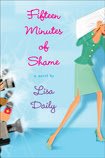
Fifteen Minutes of Shame

Author: Lisa Daily
Rating: 4.5/5
Reason for Reading: An intense need for some lighter reading

Imagine yourself on the worst day of your life. You've just been told your husband is cheating with his ex-wife and is planning to leave you. Now imagine being told that on The Today Show where you are being interviewed as America's foremost dating expert. Yeah, Darby Vaughn is having a bad day.

Thanks to the shocking revelation on national TV, the sales of Darby's new book are tanking, fans are deserting her, and tabloids everywhere are having a field day at her expense. But harder still is trying to unravel why her husband left her. When they married, he had two children from a previous marriage and Darby threw herself into being a devoted stepmother. When she comes home after her disastrous interview on The Today Show to an empty house, she decides to fight for visitation rights with her stepchildren.

With the help of her crew of best friends, the "Dreamgirls", she begins putting her life back together. Which, of course, isn't easy. If she breaks her own well-publicized dating rules (i.e. taking back her husband) she's be a hypocrite. If she bounces back too quickly and starts hitting up the Hollywood parties with a hunk on her arms, she could jeopardize her custody battle, which is already an uphill fight.

I opened this book right away when I got it in the mail and I hardly put it down until I'd finished it. It's a quick, easy, fun read. I think what really hooked me is that Darby is a great character who manages to go through a traumatic situation if not perfectly, then with grace and wit. I loved the sharp, funny writing of this book.

Last week I was on national television, wearing a cute little non-mommy outfit and my favorite pair of Christian Louboutins, talking about how every woman deserves a fabulous life, and how they too can snag the man of their dreams. this week I'm crouching in filth, looking a lot like a homeless person because I forgot it was my turn to drive carpool this morning and I rushed out of the house wearing dirty sweatpants, the Who's Your Daddy sweatshirt I slep in, and a pair of sparkly pink flip-flops. I can't remember brushing my hair. Or my teeth.

None of the other characters in the book come close to being as interesting as Darby, but really it is worth reading this book just for Darby's story. By the end, I was really rooting for her to make the right decision in taking her husband back or not, and she didn't let me down. I don't want to ruin the ending for you, so if you'd like to know more, go ahead and pick up this book!

This book is from Pump Up Your Book Promotions as part of a blog tour for Lisa Daily's book.

Thursday, April 10, 2008

Bikini Season

Author: Sheila Roberts

I recieved a copy of Bikini Season thanks to Pump Up Your Book Promotion. You can get more info about Sheila Roberts' virtual book tour here.

Bikini season is about just that: trying to get into bikini shape by bikini season. Four friends turn their cooking club into the Teeny Bikini Diet Club in order to reach that goal.

Erin is stressed out about planning her wedding. She and her fiancée have very different ideas about how much money to spend on the wedding, and she is starting to wonder if they are really soul mates after all. Then when she tries on her wedding gown, to her horror it is about 2 sizes too small. A childhood friend of her brother's keeps bumping into her, and he, it seems hasn't quite forgotten their attraction to each other from way back when.

Angela is a stay-at-home mom, torturing herself over comparisons between herself and the hottie that works with her husband. He does seem to be keeping a secret from her, but does that mean he's cheating?

Megan has been overweight her whole life. Despite the fact she graduated at the top of her class at law school, she knows she'll have a disadvantage in her career if she can't find a way to overcome her insecurities and learn the art of schmoozing clients.

Kizzy knows she has to lose weight. Her doctor told her in no uncertain terms what the consequences are if she doesn't. But that doesn't seem to be stopping her husband, Lionel from sabotaging the diet.

I'll admit up front this is a genre I have not read much of. It has also been awhile since I read a book that split the narration evenly between so many characters. As is inevitable with that style, there are some characters I wanted to read more about, and some less. I could relate best to Erin and her wedding stress; I got married about a year and a half ago, and how well I remember all the stress of dealing with vendors and dates and prices and family issues. Her transformation from hating Dan (the childhood crush) to gradually seeing him in a new light was cute and romantic. Angela's whining about her husband when everyone else kept telling her he wasn't cheating got annoying after awhile. The Tiny Bikini Diet Club comes up with some creative weight-loss ideas, including pole dancing and Dance Dance Revolution. And of course, the characters go through ups and downs with their weight-loss goals.

Overall, I thought this was a cute book about finding yourself. If you are a fan of the chick-lit genre, this one is definitely worth your time.

** Sidenote: Doesn't the puppy on the cover of the book look like my puppy? Yet one more reason to like the book.

Saturday, April 5, 2008

Books of History

I've asked my wonderful husband to be a guest blogger here on boldblueadventure, so he can occasionally review the books he reads. This is his very first guest post!

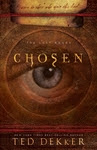
Books: Chosen and Infidel
Author: Ted Dekker

Chosen and Infidel are the first two of four books in the young adult series, Books of History.

The story line is a continuation of Dekker's Circle series. The setting is an alternate reality, thought to be thousands of years in the future from our time: post-Armageddon. In a land left ravaged by evil, with only seven sacred forests left a war wages between two races. The fighting forces are running low and the Supreme Commander of the Forest Guard is forced to lower the age of recruitment. Thus a young adult series is born.

We meet a group of young champions who are hand-picked among thousands of 16+ year olds to lead the Forest Guard in battle against the surmounting numbers of the Desert Hoard. However, there are other forces at work behind the scenes. These forces have different priorities and different plans for the chosen four. There is a prophecy surrounding one of the four chosen that he will be the hero to defeat the evil one. It is his journey that is central to the plot.

Some questions arise though. The plot is not as simple as it seems. This is where Dekker's brilliance shines through. Here we see the connection of the circle series with books such as Saint, Sinner and Skin. All of these books will be part of the "circle saga" where I think everything will come "full circle", so to speak. Now what remains to be seen is how will Dekker pull these separate stories together.

Chosen was an interesting hook into the series. It actually really reminded me of Terry Brooks Armageddon's Children. I liked the action and the plot development. Although not overly descriptive, Dekker does well to create a landscape for the book without sacrificing the energy of the piece. I'm eager to read Renegade and Chaos, but at this time it is only to satisfy my curiosity about the series. In reading Infidel, I had the same feeling that I did when I read White. The feeling was that Dekker wrote the book as a filler. Because he had a longer story to write, he needed to fill the gap between the beginning and the end. This is one draw-back to Dekker in my opinion. Whereas an author of the likes of Tolkien can write a series such as Lord of the Rings, without leaving the reader skimming the pages just to get through it, Dekker seems to slow the story down so much that it just doesn't keep me interested. It seems too that Dekker has one plot line that he simply inserts into different environments with different characters. This is perhaps the draw-back to having so many books and trying to bring them all together. I wonder if Dekker had an overall plan for what his circle saga would be, or if he thought of a clever way to bring them all together.

One element that I do find interesting about this series and the overall circle series is the central element of romance. Everything is ultimately centered around the "Great Romance" which is a religion of love. Dekker develops a view of romance that is post-modern, yet with sex-dependent roles. He keeps the older-fashioned ideal that men will pursue women. Although, throughout the series women seem to have more wisdom and clarity of thought then men. Women and men have needs that seem to be inherit to their sex, however they are very equal in capabilities.

Both books are light reads and a good enough of a story that I would recommend them. Just know that you will be in for the long haul; if you read one you must read them all!